

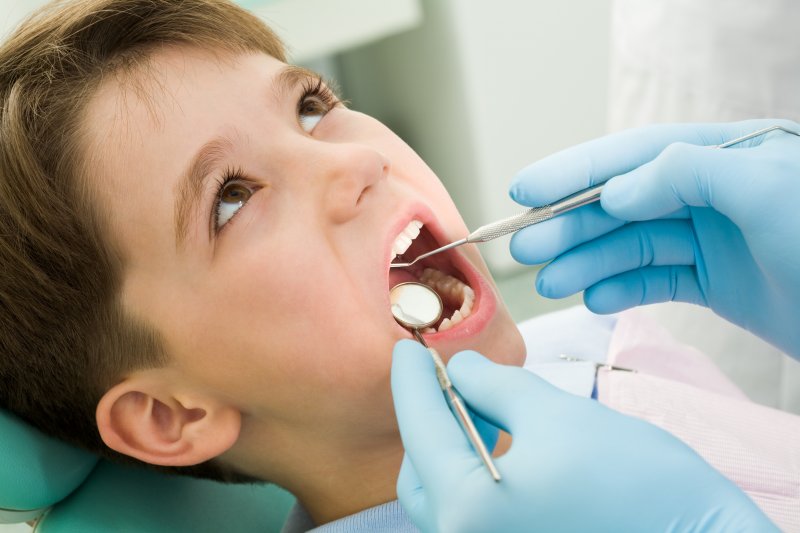
Your child’s pediatric dentist informs you that they need pulp treatment. It’s not the news you want to hear, and you think maybe it’s not as serious as they’re making it seem. Seeing the reaction on your child’s face, you decide to hold off on treatment to see if the situation improves on its own. Learning that this procedure is necessary for your little one may not be what you expected, but putting it off can lead to serious consequences. Read on to discover what can happen and why your child shouldn’t wait.
What is Pulp Treatment?
Pulp treatment or a “pulpotomy” is similar to a traditional root canal for adults, but this procedure is used for children.
When a severely decayed tooth is causing pain, it usually means an infection exists and needs to be addressed. With pulp treatment, your child’s pediatric dentist can remove the infected portion of the pulp – the innermost layer – before sanitizing the tooth. Gutta-percha, which is a biocompatible solution, is used to restore the structural integrity of the space before a customized crown is positioned over the tooth to improve stability.
What Can Happen if Your Child Doesn’t Undergo Treatment?
If you do not agree to let your child’s dentist move forward with pulp treatment, it’s possible that the following may occur:
- More intense and severe tooth pain
- An abscess – a bump on the gums – can form and ooze blood or pus while brushing and flossing
- The infection will spread to nearby teeth, the gums, or the jaw
- Their gums will become inflamed because of additional fluid within the soft oral tissues
- If the infection reaches the bone, it can cause tooth loss or require the tooth to be extracted
What Are the Benefits of Pulp Treatment?
By choosing to say “yes” to your child’s pediatric dentist and allowing pulp treatment to occur, you will encourage the following benefits:
- They’ll no longer experience tooth pain because the pulp, which is the source of the pain, will be removed.
- The infection will no longer be a problem for your child’s teeth, gums, or bone.
- Your child will get to keep their natural tooth longer.
- Your child will enjoy better oral health because they can continue eat, speak, and smile without issue.
Don’t put off your child’s pulp treatment. Their pediatric dentist is well-versed in this type of procedure and wants what is best for your little one.
About the Author
Dr. Katiana Cruet is a board-certified pediatric dentist with 10+ years of experience. Her desire to treat children so they can reap the reward of a healthier smile is why she continues to pursue this career choice. Working closely with parents, she and the team at Healthy Kids Pediatric Dentistry never recommend extensive treatment unless it’s necessary. If we suggest pulp treatment, trust that we see the problem and will provide only the safest, most effective solutions for a healthier smile. Visit our website or call (301) 871-8880.